Likewize is a global device protection company, operating a "come to you" device repair service in the United Kingdom, Germany, Canada and Australia. Instead of asking customers to mail in a device when something needs repairing, Likewize sends a technician out to the customer's home or business. When it first started, the company was called WeFix and had just one or two technicians operating in a small corner of the UK. Things were relatively simple. At first, they simply used a Google API to create groups and use that to schedule routes, but that created a number of sub-optimal situations: it was impossible to move jobs between technicians, and sometimes technicians would cross paths with each other.
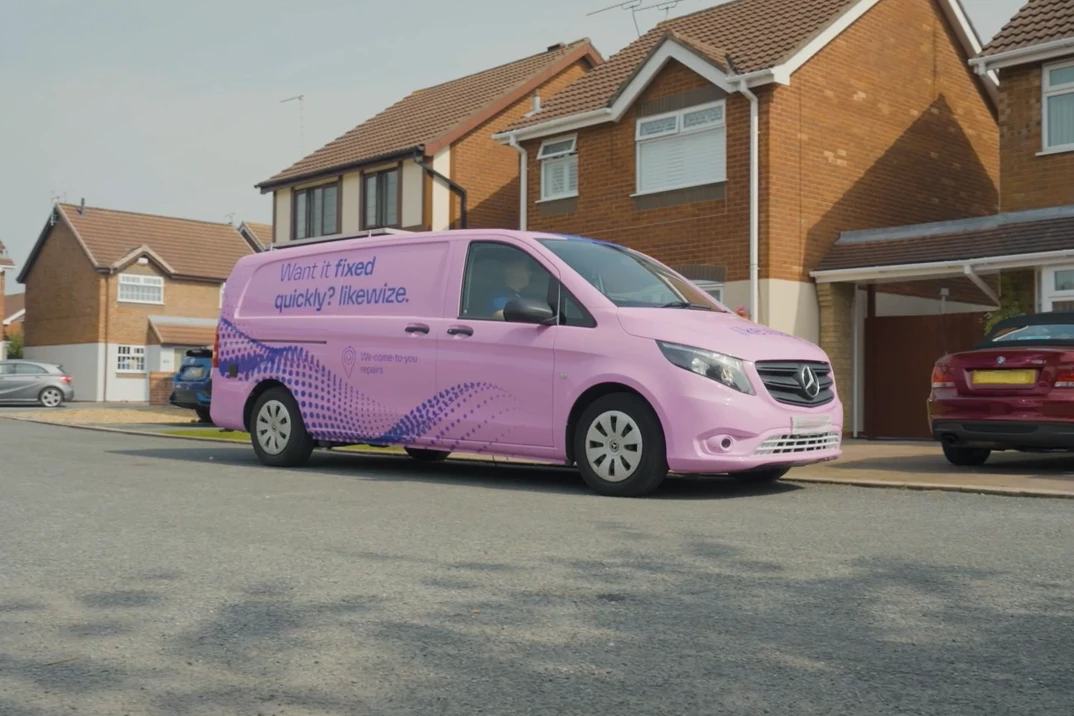
When WeFix was acquired by Likewize and the "come to you" device repair service was expanded, this simple approach to route planning no longer worked.
At first, Likewize tried hiring a data scientist to create a custom solution for them. And it did work quite a bit better, but every time they wanted to update the system, they had to talk with the data scientist. Not only was that expensive, but data scientists are in demand, so they would have to wait months for the changes to be made.
At this point the company had nearly 100 technicians across the UK and was expanding in Germany, Canada and Australia. And route optimization is critical to the company's viability. "The most optimal routes allow us to get more jobs in a day, which just makes the whole thing more profitable," said Curtis Harrington-Iñesta, head of development at Likewize. When one of the company's developers came across Verso, Likewize decided to try a proof of concept, and then became a customer in early 2025.
It allowed us to just throw jobs into it and allow it to optimize those routes to the tightest routes possible, and move those jobs around as needed.Curtis Harringtong-Iñesta, Head of Development, Likewize.
Technicians' routes were easy to update, and were dramatically more efficient than before, resulting both in more jobs done per technician in each day as well as less emissions per vehicle.
Staying Flexible
One of the biggest problems with the previous approach to optimization hinged around flexibility. If a technician had a doctor's appointment and had to finish at noon instead of 5pm, all the afternoon jobs would suddenly be unscheduled, and moving them to other technicians was a huge amount of work. And then there were the jobs that the optimization software wouldn't be able to fit in - before using Verso, these would just get booted out.
Now, the process for rescheduling is automated, not manual. And if the optimization software can't fit jobs into the schedule, the job is highlighted and there's a reason given for why it isn't able to be accommodated, which gives the team enough information to potentially change the parameters to get the job done. For example, if including a job will change a technician's end time from 5pm to 5:15pm, that's a change that a manager or a technician might make.
As a result, Likewize's fleet of technicians is much more flexible to changes, and can more easily adapt to changes in availability without impacting customers or the ability of the company to get as many repairs done per day as possible.
Adding Skills
Likewize participates in a Samsung partnership program which requires that technicians complete a fairly extensive training program whenever a new flagship device is released in order to become certified to repair the flagship devices. It's simply impossible to get all of the technicians certified overnight. "It was an absolute nightmare", Harrington-Iñesta said. Because there was no way to schedule jobs in a way that took into account who had been certified and who hadn't, Likewize just wouldn't accept any repair requests for Samsung flagship devices until every single technician had gone through the training, which meant two months out of the year when the latest Samsung flagship device wouldn't be supported. "It looked really bad for us as a business and as a partner to Samsung," Harrington-Iñesta said.
Since becoming a Verso API customer, Likewize is able to say which technicians have been trained for which devices, and automatically schedule them for the appropriate jobs.
Happier Technicians and Customers
Before using Verso, Likewize's technicians would frequently complain about the optimization, often because the optimization was taking them all over the place. Technicians have been extremely eager to adopt Verso's optimizations, and complaints about routes have dried up.
For customers, Likewize doesn't generally offer time slots, because there are so many unpredictable elements in device repair, most notably that a repair can require parts or be more extensive than anticipated. However, since starting to use Verso Likewize uses the time window functionality internally, most frequently to ensure that revisit repairs can be done at a time convenient for the customer.
Using Verso's API has increased technician satisfaction, increased Likewize's ability to serve customers and to get repairs done in a timely manner, improved Likewize's partnership with Samsung and ultimately made the company more profitable by increasing the number of repairs that can be done per day.
Contact us